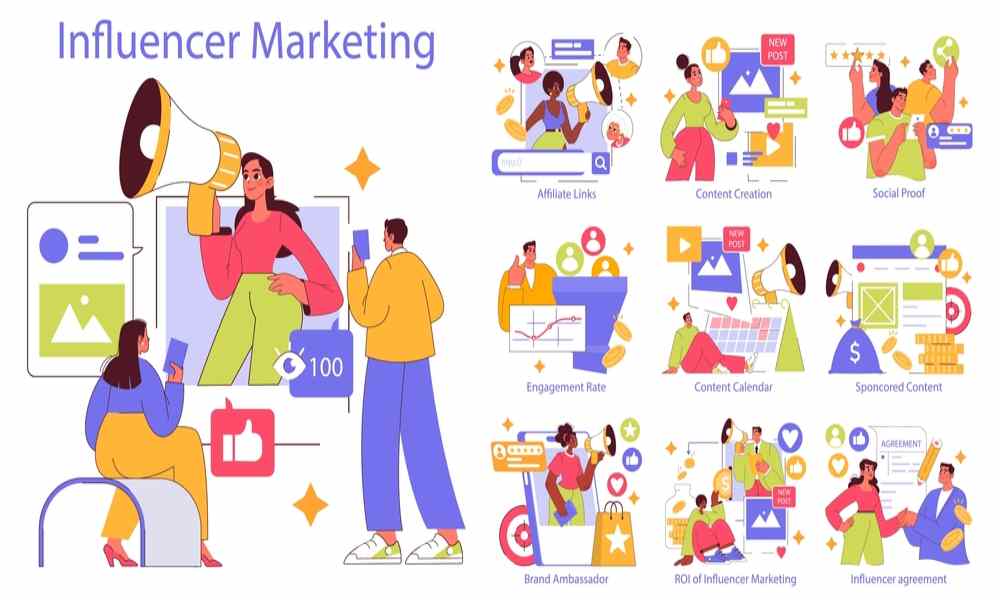
Influencer marketing, which drives more sales, is a question every digital marketer is asking right now. Both influencer campaigns and affiliate networks have their strengths, but they serve very different goals. Influencer marketing builds trust and brand awareness fast, while affiliate networks deliver trackable, performance-based revenue with measurable ROI. For brands focused on consistent sales growth, understanding the difference is critical. This article breaks down how each model works, where each one wins, and which makes more sense for your business goals. Whether you`re launching a new product or scaling an existing program, the right strategy makes all the difference.
Affiliate Network vs Influencer Marketing Which Drives More Sales? Every business wants more sales. But when it comes to choosing between an affiliate network and influencer marketing, most marketers get stuck. Both have their strengths. Both can work. But only one is the smarter bet for consistent, trackable revenue growth. This guide breaks it all down simply, clearly, and without the fluff.
What is an Affiliate Network?
Affiliate Network is a platform that connects brands with audiences and gets a commission for every purchase. It works on a model where you only pay when something happens. The people who promote products are usually bloggers, website owners, or content creators. They can reach their target audience and promote products from businesses.
How it works:
- A business joins an affiliate network. Lists its products or offers there.
- Publishers sign up to the network. Get unique links to track.
- The publisher gets a commission when the customer clicks on a link and buys products.
- It manages tracking, payments, and reporting automatically.
What is Influencer Marketing?
Influencer marketing is when companies work with people who are popular on Instagram, YouTube, TikTok, and other sites to help companies tell others about their products or services. Payment is typically a fixed fee or free product sponsorship, regardless of sales results.
How it works:
- Influencers are found by brands that match their target audience.
- So the company pays these people to promote (or even create content about) their products. They could be receiving money, free products, or both, as well as a percentage of the sales that the company sells to the customers that the affiliate promoter brought to the website.
- This person in the media makes posts about our products.
- The purpose of a company`s corporate communications is to gain visibility and hope to generate new customers, in the long run, through the sales of their products or services.
Affiliate Network vs Influencer Marketing: Key Differences
|
Feature |
Affiliate Network |
Influencer Marketing |
|
Payment Model |
Performance-based |
Fixed fee or sponsored |
|
ROI Tracking |
Real-time |
Difficult to track |
|
Cost |
Low risk |
High upfront cost |
|
Sales Focus |
Direct sales |
Brand awareness |
|
Best For |
Conversions |
Reach & visibility |
|
Fraud Risk |
Low |
High |
|
Scalability |
High |
Limited |
Which Drives More Sales: Affiliate Network or Influencer Marketing?
While Influencer Marketing, which drives more sales relative to affiliate networks, is a better vehicle for acquiring those sales is actually in affiliate marketing. The figures tell us that affiliate marketing is the direct path to revenue. Industry stats state that the average ROI delivered by affiliate marketing is $15 for every dollar spent. Raising awareness and sales is not easy, especially since a lack of a tracking tool does not help to convert attention into measurable sales.
Pros and Cons of Affiliate Network
Pros
- Pay only when someone actually buys, so you do not waste any money.
- Real-time tracking of every click and every time conversion.
- You do not risk losing a lot of money, with a high reward by design.
- Easy to make this work for you as your budget grows.
Cons
- It takes time to find a publisher, and a base takes time and consistent outreach.
- You have to keep an eye on Commission rates, payouts, and fraud prevention, which need ongoing management
Pros and Cons of Influencer Marketing
Pros
- It gets your brand in front of a number of people immediately.
- Followers know that people trust them, and the actionable recommendations are more likely to be acted upon as they feel real.
- A fast way to put a product in the works and make conversation.
Cons
- You have to shell out some serious capital upfront. You are not guaranteed anything in return.
- It becomes difficult to find out whether you are getting a decent ROI on your product.
When to Choose an Affiliate Network Over Influencer Marketing?
Choose affiliate marketing in these situations:
- You want to know exactly which channel is driving sales. You need to track the performance of each channel.
- Your budget needs to work. You only pay for results.
- You are ready to grow your business. You do not want to increase your ad spend much.
- You are in e-commerce or SaaS. Affiliate marketing is a fit for you.
- You want content that keeps driving sales over time.
When to Choose Influencer Marketing Over an Affiliate Network?
Influencer marketing can be used in the following situations:
- You want the ability to generate excitement quickly upon launching a product.
- Your audience consists of a specialized niche, wherein specifically concentrating on influencers can help articulate the space.
- Building more trust is equally regarded as valuable as achievement, and influencer campaigns can be a wonderful vehicle in that regard.
- The domain of your service/or product lies in beauty, sports, fashion, food, and/or fitness. They are where the influencer market muscles in more.
- You prefer to develop long-term brand value as opposed to short-term transactional value.
Can You Use Both Affiliate Network and Influencer Marketing Together?
Yes, more smart marketers are using this combination as their strategy. You can get influencers to join your affiliate program. Give them links to track their performance and offer them money for each sale they make. This way, they really want to sell your stuff. You get people to know your brand.
Final Verdict:
The affiliate network is the choice for businesses that want to make money that is easy to track over a long period of time. It`s low-risk, easy to measure, and built to scale. Influencer marketing has its place, especially making people aware of a brand and launching products, but it should not be the main way you try to sell things.
Ready to start your own affiliate program? Platforms like Affilza Affiliate Network. Our platform simplifies the creation and management of your perfect affiliate program and provides the tools to track, set up, and manage your own publisher network in real-time. Start your affiliate program today and achieve results with the first click!
Publishers that drive sales. People now trust your brand with influencer marketing. If you care about ROI, affiliate programs work.
Frequently Asked Questions
Does affiliate marketing or influencer marketing which drives more sales?
Affiliate marketing pays people to sell, so it guarantees sales. Influencer marketing provides knowledge about products. However, it doesn’t guarantee purchases.
How do affiliate networks track sales?
They use cookies, links, and pixels. Affiliate networks track the sales in real time when customers buy using the links. The commission is paid instantly.
Is influencer marketing worth the cost?
When influencer marketing targets are clear and easy to understand, and when we can see how things are going. When influencers get paid through links that we can track or unique codes, it helps brands see how well influencer marketing ROI 2026 is working for them by the time we get.
Which is cheaper: an affiliate network or influencer marketing?
Affiliate networks are cheaper; you only pay on completed sales. Brands on a budget will prefer affiliate programs over influencer marketing because there are no upfront fees until a sale is made.